
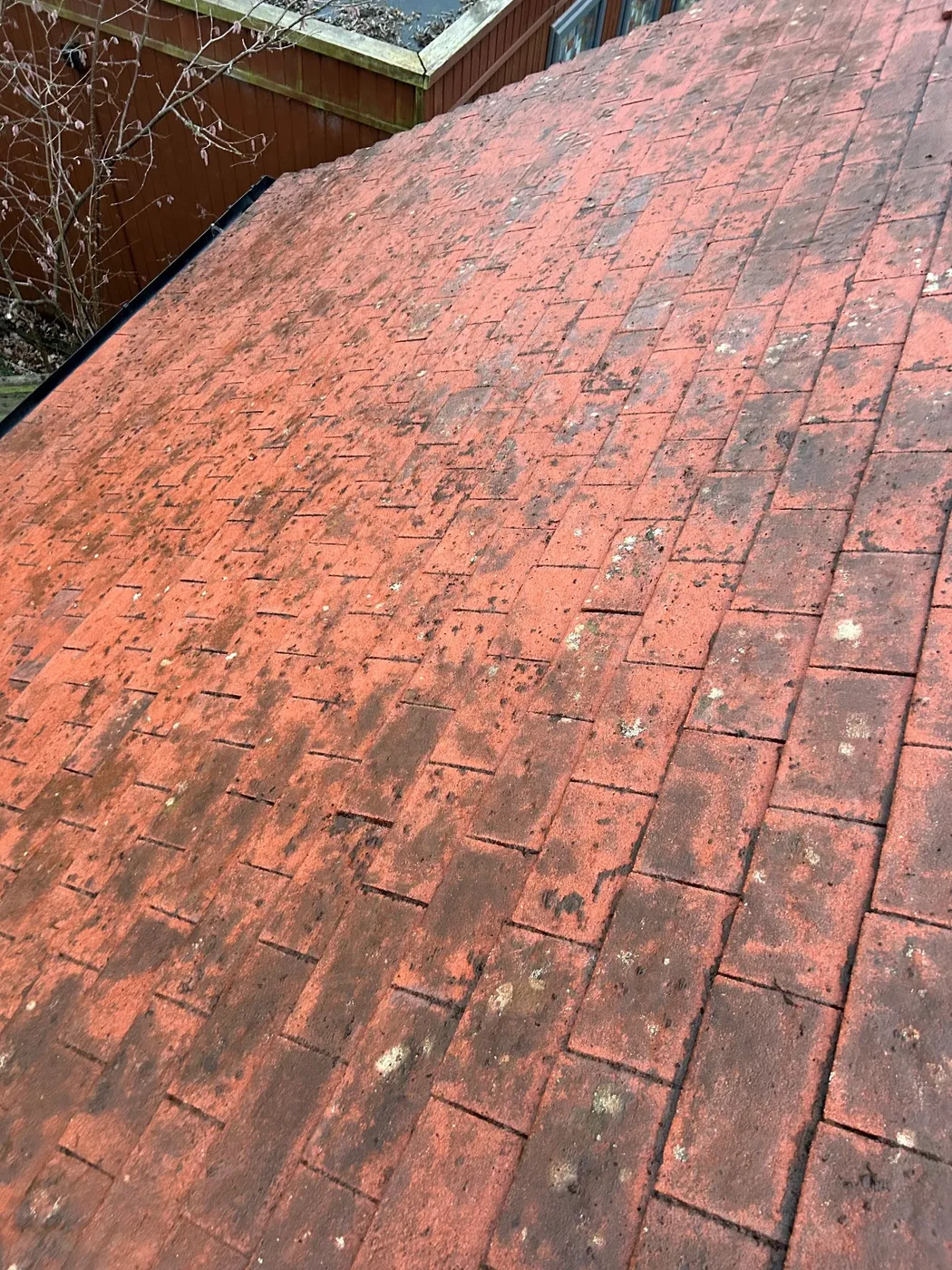
The honest answer is that on a sound modern concrete tile roof, a light covering of moss is mostly cosmetic and not urgent. The Roof Tile Association, which speaks for the tile makers, and the National Federation of Roofing Contractors both say so in their own published guidance. Moss does cause real harm in specific places and on specific materials, and we set those out below.
What the trade bodies and tile makers say
Start with the Roof Tile Association, which in its own words represents the UK's leading manufacturers of pitched roofing products. Its care and maintenance guide for clay and concrete roof tiles says: "In normal circumstances however, moss growths do not damage concrete products and are sometimes viewed as providing a more weathered and pleasing appearance to the roof."
The National Federation of Roofing Contractors agrees. Its guidance note GN58 says "The primary effect of moss on a roof is that it holds water", and that "If severe moss growth affects the drainage of water down the roof it should be carefully removed". Its homeowner page puts it plainly: moss on roof tiles "is rarely a problem".
Marley, a UK roof tile manufacturer, calls low to moderate growth "a natural part of the ageing process on many pitched roofs", and says that "unless the roof is leaking or the gutters/outlets are blocked, then the best advice is to leave the moss/lichen where it is." We clean roofs for a living, so we know how that reads. It is still what the sources say.
What moss does, and what it does not
That does not make moss harmless everywhere. Wienerberger, which makes Sandtoft roof tiles, sets out the mechanisms. The first is moisture: it says "moss absorbs moisture and retains it even after rainfall has stopped". A damp tile is not automatically a damaged tile, but it is where everything else starts.
The second is the interlocks, and this is the one to take seriously. Wienerberger says moss growing in the joints of the tiles can "block the interlocking channels, preventing them from functioning as intended and potentially allowing water to penetrate the sub-roof", and that obstructed joints reduce airflow through the roof.
The third is mortar. Moss "tends to thrive on mortar, often resulting in excessive growth around ridge tiles", Wienerberger says, and that growth can crack the mortar as it penetrates the cement. Cracked bedding mortar is on the Roof Tile Association's maintenance list too, and re-bedding is a roofer's job rather than a cleaner's.
GN58 puts the difference between moss and lichen precisely: lichens form "leather-like incrustations" that "may be embedded into the substrate of the covering". Embedded, rather than sitting on top, is why lichen takes longest to shift, on a roof and on paving alike, which we cover in removing black spots and lichen.
Now the half that usually gets left out. Moss does not eat a sound tile, and on its own it does not make a sound, well laid roof leak. What the sources describe is indirect. Marley says a heavy build-up keeps the covering wetter for longer, which "increases the chance of roof leaks and can also accelerate the deterioration of the roof tiles". That is drainage doing the damage rather than moss eating the tile.
Weight is the other claim. Wienerberger says that "in extreme cases, roofs covered in a thick layer of moss can significantly increase in weight due to retained water, potentially posing structural concerns". It puts no figure on it, and neither GN58 nor the Roof Tile Association guide mentions the weight of moss at all.
The materials where moss does the most harm
What your roof is made of decides the answer for your house.
- Concrete tiles: this is what the Roof Tile Association means when it says moss does not normally damage concrete products. A light covering on sound concrete is close to cosmetic, even though GN58 says a sanded or granule face attracts moss first.
- Clay tiles: Wienerberger links moss and constant damp to delamination in clay, which it describes as "where the clay surface separates from the main body of the tile". Moss matters more here than on concrete.
- Older, porous and plain tiles: David Watt, a chartered building surveyor writing on historic buildings, says growth on porous materials such as roofing tiles "can, however, result in frost-related damage".
When it is worth acting, and when we would say leave it
The short checklist we use when we look at a roof:
- Water is visibly not running off properly, or spills over the front of the gutter instead of into it.
- Moss is sitting down in the tile interlocks and joints, not just lying on the faces.
- Heavy growth around the ridge, with the mortar up there cracked or crumbling, which is one for a roofer to look at rather than a cleaner.
- Clumps shedding into the valleys, abutment gutters and downpipes.
- The roof is older clay or plain tile rather than modern concrete.
That list is not just ours. The Roof Tile Association says that where moss "affects the drainage of water down valleys, abutment gutters and the interlocking drainage channels of the roof tile, they should be carefully removed". Marley goes further: "A heavy build-up of moss and lichen will inhibit the flow of water off the tiles, so the roof covering stays wetter for longer, this increases the chance of roof leaks and can also accelerate the deterioration of the roof tiles." Drainage is the common thread in every source we found.
Now the other side. If your concrete tile roof is sound, the water runs away freely and the moss is a light covering on a north facing slope under trees, we will often tell you it is not worth doing yet. It will come back in that position, and no wash holds it off for good on a shaded roof. The Roof Tile Association does describe trailing copper wire across the slope as "a more permanent solution", though that is a roofing job rather than a cleaning one. Our before and after page shows the roofs that were worth doing.
One job usually is worth doing, and it is the gutters rather than the tiles. The Roof Tile Association tells owners to clear leaves, debris and "any moss or lichen growths that restrict the flow of water off the roof slope" from valleys and gutters. Dead moss sheds off the tiles and lands in the gutter, so that is usually the first real symptom. Our gutter clearing page covers what that involves.
Why removal does not last, and why it is work at height
The Roof Tile Association is blunt about physical removal. It says attempts to remove moss or lichen "by scraping them off the tile are not recommended, as it can result in broken or damaged tiles and unsightly scrape marks on the surface of the tiles", and that "inevitably the process will have to be repeated in the future as the mosses and lichens return". That is why removal is one part of a job rather than the whole job: some roofs suit careful removal of the dry moss, some suit a soft wash and biocide, some suit both, and a few are best left alone.
A chemical wash lasts longer, but not for ever. The same guide says a proprietary toxic wash is "only likely to be effective against further moss or lichen growth for approximately two to three years", so it is worth expecting to do it again rather than treating it as a one off.
It also takes time to show. Those washes "take a few days to be fully effective and should preferably be applied during a spell of dry weather", so the roof carries on clearing over the following weeks. GN58 adds one point our other article does not: "It is not recommended to remove moss by pressure washing as this can force water into the roof space, particularly if sprayed upward from ground level." The full comparison is in our guide to soft washing versus pressure washing a roof.
Then there is getting up there. The HSE says: "All roofs should be treated as fragile until a competent person has confirmed they are not." It also says "almost one in five deaths in construction work involve roof work". GN58 says walking directly on the roof "can cause unnecessary pressure and lead to further damage", which is the irony of a badly done clean. One more GN58 warning, and it sets no limit on where it applies: "Never scrape or brush what may appear to be an asbestos-cement type covering."
How often should you look at your roof?
The useful answer is about looking, not cleaning, and the two main sources differ. Wienerberger recommends "conducting an annual visual inspection to identify potential concerns", and says "Accessing the roof every three to five years for maintenance should suffice." The Roof Tile Association wants a closer eye on it, advising visual inspections "usually twice a year, in the Spring and Autumn". Neither says clean it every year.
A visual inspection means from the ground with binoculars, or out of an upstairs window. Look for moss thick enough to sit in the joints, growth piled around the ridge, clumps in the valleys and gutters, and water that is not running away. Around Surrey and West Sussex, check the shaded roofs under trees and the north facing slopes first, which as GN58 puts it "remain damp longer".
If you would like an honest view on whether yours is worth doing, we are happy to look and tell you if it is not. Our roof cleaning page explains how we work, and you can ask us for a quote whenever you are ready.
Frequently asked questions
Does moss on a roof actually cause leaks?
Not on its own, on a sound roof. Wienerberger says moss in the tile interlocks can block the drainage channels and potentially allow water to penetrate the sub-roof. Marley says a heavy build-up keeps the covering wetter for longer, which increases the chance of roof leaks. The risk is blocked drainage, not moss eating through the roof.
Should I just leave the moss on my roof?
Often, yes. The NFRC says moss on roof tiles is rarely a problem and only needs removing if it is blocking gutters, outlets and other drainage points. Marley advises leaving low to moderate growth alone unless the roof is leaking or the gutters are blocked.
How long does the Roof Tile Association say a roof wash lasts?
It says a proprietary toxic wash is only likely to be effective against further moss or lichen growth for approximately two to three years. No wash is permanent, and a shaded roof under trees will grow moss again. We will not put a timescale on your roof.
Can I scrape the moss off my roof myself?
We would not recommend it. The Roof Tile Association says attempts to scrape growths off the tile are not recommended, because it can break or mark tiles, and that the job has to be repeated as the growth returns. The HSE says all roofs should be treated as fragile until a competent person has confirmed they are not. Lifting dry moss carefully off a roof, from proper access, as one stage of a job is different from going at a wet roof with a scraper off a ladder.
Does moss make a roof heavy enough to be a structural problem?
Wienerberger says that in extreme cases, roofs covered in a thick layer of moss can significantly increase in weight due to retained water, potentially posing structural concerns. It puts no figure on it, and it limits that to extreme cases. Neither GN58 nor the Roof Tile Association maintenance guide mentions the weight of moss at all.